
How to Care for Jaipur Hand Block-Printed Linens: The Complete Washing & Longevity Guide
Hand block-printed cotton bedsheets are heirlooms, not commodities. One wrong wash cycle can strip years of character. This is the definitive care guide.
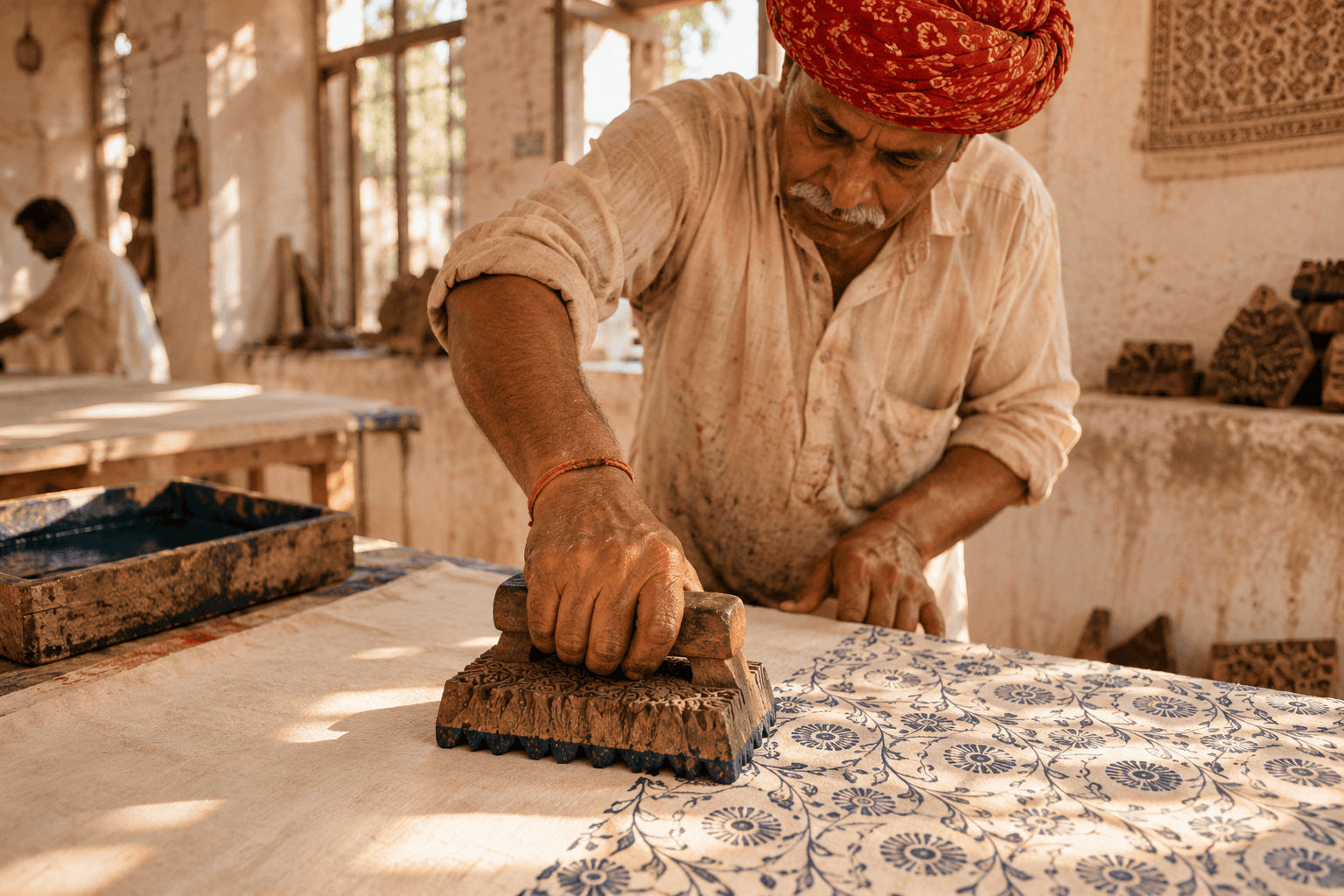
Jaipur artisan pressing a carved teak woodblock onto organic cotton fabric
A Jaipur hand block-printed bedsheet is not a mass-produced commodity. Each one carries the fingerprint of an artisan who carved the woodblock, mixed the botanical dye, and pressed every motif by hand. That living craft deserves a care ritual that matches its origins — and fortunately, the right care is simpler than most people fear.
The Botanical Dye Preservation Rules
- ✓First Wash Pre-Soak: 20 min in cold water with white vinegar and rock salt to stabilise mordants.
- ✓Temperature: Cold water strictly under 30 °C to protect organic cotton fibres.
- ✓Drying: Dry exclusively in deep shade with gentle airflow.
- ✓Ironing: Iron inside-out on medium heat while slightly damp.
- ✕Hot Water (> 40 °C): Irreversibly breaks mordant dye bonds and causes colour bleeding.
- ✕Chemical Bleach: Completely strips natural plant pigments and erodes organic yarn tensile strength.
- ✕Direct Afternoon Sun: Ultraviolet radiation causes rapid photodegradation of botanical colours.
- ✕Plastic Storage Bags: Traps moisture, encouraging mildew and yellowing.
Understanding Natural Dyes Before You Wash01
Most synthetic dyes are chemically bonded to the cotton fibre under industrial heat and pressure, making them highly colourfast from the first wash. Natural plant dyes — indigo, pomegranate rind, madder root, turmeric — are fixed through traditional mordanting: a mineral salt solution that creates a molecular bond between dye and fibre.
This mordant bond is strong, but it has different sensitivities than synthetic dyes. Alkaline detergents, hot water above 40 °C, and prolonged UV exposure are the three primary enemies of a natural-dye block print. Understanding this guides every care decision below.
The First Wash: Most Critical02
Before the first use, soak your new bedsheet in cold water for 20 minutes with two tablespoons of white vinegar and a small pinch of rock salt. This pre-soak stabilises any unfixed surface dye, sets the mordant bond more completely, and removes any handling residue from shipping.
After soaking, gently handwash or machine wash on a delicate cold cycle (30 °C maximum) with a mild, pH-neutral, bleach-free liquid detergent. Avoid powdered detergents — the undissolved granules can act as a mild abrasive on the printed surface.
Important: Always wash separately or with similar dark tones for the first two washes. Some surface dye transference is normal and decreases completely by the third wash.
Ongoing Machine Washing Protocol03
Temperature: Cold water, 30 °C maximum. Natural dye mordant bonds begin weakening above 40 °C. Hot wash causes irreversible colour migration and premature fibre fatigue.
Cycle: Delicate or gentle cycle only. The standard cotton cycle's agitation force is designed for durable synthetics — it will stress the long-staple cotton fibres and accelerate pilling.
Detergent: Use a pH-neutral liquid detergent, soap nut solution (reetha), or specialist natural-fibre wash. Detergents marked 'bio' or 'enzyme' can break down the protein-based mordant compounds. Avoid fabric softeners — they coat the cotton surface with silicone, reducing breathability and natural softness.
Load: Wash alone or with other naturally dyed items. Heavy denim or synthetic fabrics create micro-friction against the printed surface during tumbling, which gradually erodes print edges.
Drying: Shade Is Non-Negotiable04
Direct, intense sunlight is the leading cause of premature fading in natural-dye block prints. UV radiation breaks the molecular bonds between the mordant and the dye chromophores — a process called photodegradation. A block-printed bedsheet left in full afternoon sun for repeated drying cycles can lose 30–40% of its colour depth within six months.
Dry in full shade with good airflow, ideally laid flat or hung loosely over a rack. If outdoor drying in partial sun is unavoidable, turn the sheet print-side inward and limit exposure to morning sun before 9 AM.
Do not tumble dry on high heat. Low tumble (below 40 °C) is acceptable occasionally, but the combination of heat, mechanical tumbling, and friction accelerates fibre wear. Line drying in shade preserves both colour and tensile strength.
Ironing & Storage05
Iron inside-out on medium heat (cotton setting) while the fabric is slightly damp. Ironing print-side-down protects the surface from direct contact with the iron plate, which can scorch natural pigments and leave a permanent shine.
For storage, fold loosely and store in a breathable cotton or linen bag — never in plastic, which traps moisture and encourages mildew. Place a sachet of dried neem leaves or lavender inside the storage bag to naturally deter silverfish and cloth moths without chemical sprays.
Rotate your bedsheets every week to ensure even wear across all pieces in your linen wardrobe.
What Happens When Colour Bleeds: Fixing It06
If minor dye transfer does occur (typically on the very first wash), act immediately. Rinse the affected area in cold water — never hot, as heat sets transferred dye permanently. Soak in a solution of cold water, one tablespoon white vinegar, and a half-teaspoon of salt for 15 minutes.
For more persistent transfers, a cold water soak with a natural oxygen cleaner (not chlorine bleach) for 30 minutes followed by a cold gentle wash is effective. Chlorine bleach will permanently destroy natural dye and damage the cotton fibre — it must never be used on hand block-printed linens.
Handcrafted in JaipurExplore Artisanal Block-Print Collections
100% single-ply organic Jaipur cotton, woven in breathable 300–400 TC percale. Generous 108 × 108 in master dimensions designed for effortless tuck-in on King and Queen mattresses.
Complimentary 7-Day Returns
Heirloom craft, delivered to your doorstep.
Frequently Asked Questions
Minimal dye transference on the first one to two washes is normal for natural plant-dye block prints. Unlike synthetic reactive dyes, natural botanical dyes fix progressively. A first-wash cold soak with white vinegar and salt accelerates fixation. By the third wash, transference stops completely and colours stabilise at their true, lasting hue.
Read Next in The Journal
Expert intelligence on natural fibers, care rituals, and mindful living.
 Fabric Guides
Percale vs. Sateen: Which Cotton Weave Is Best for Indian Weather?
India's heat and humidity demand a bedsheet that breathes. We unpack the science behind percale and sateen weaves so you can sleep cooler all year.
 Sizing & Styling
Fitted vs. Flat Sheets: Master Mattress Sizing Guide for Indian Homes
Confused by King vs. Queen sizes, tuck-in depths, or whether a fitted sheet truly works on a 10-inch mattress? This guide resolves every bedsheet sizing question for Indian buyers.
