
Percale vs. Sateen: Which Cotton Weave Is Best for Indian Weather?
India's heat and humidity demand a bedsheet that breathes. We unpack the science behind percale and sateen weaves so you can sleep cooler all year.

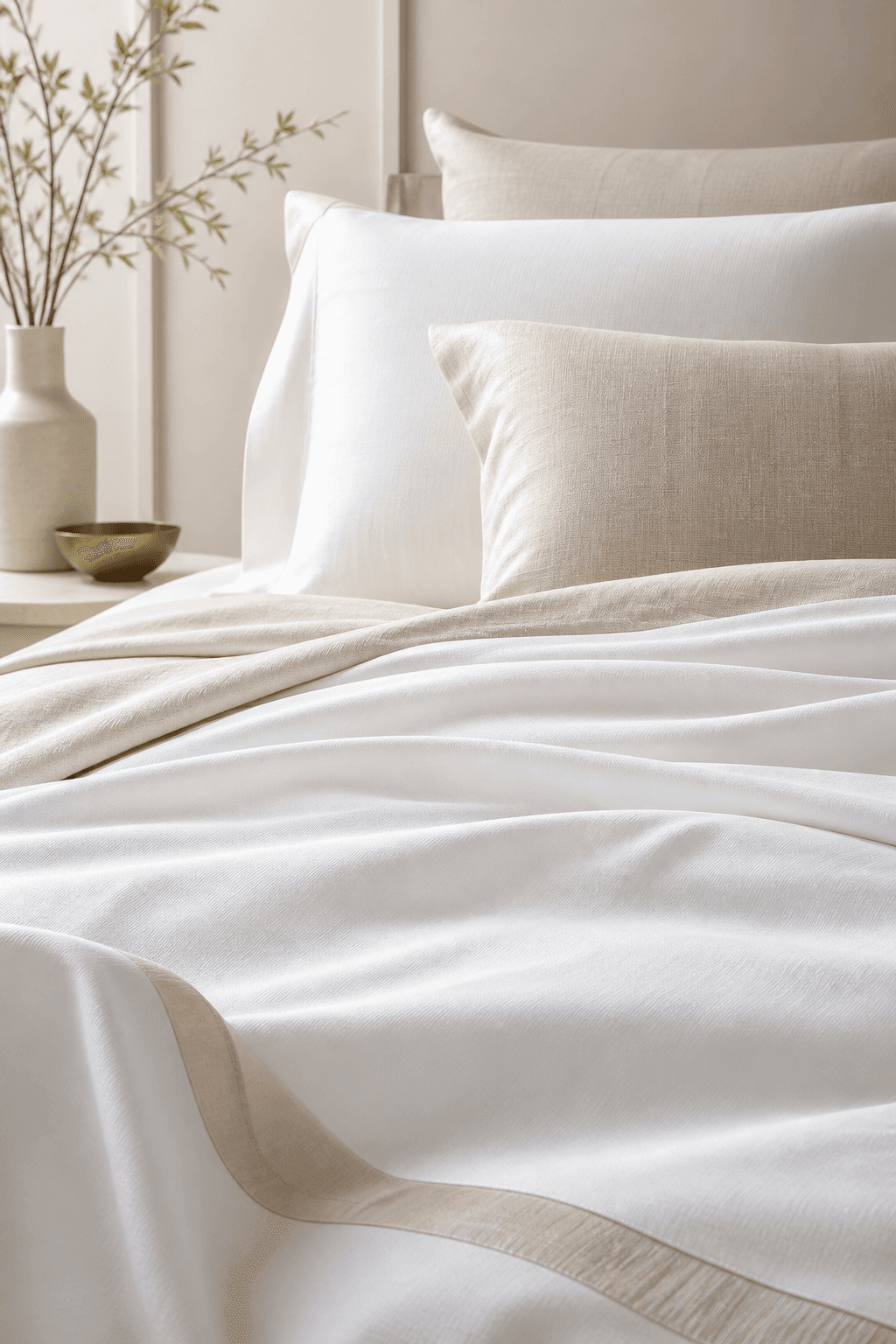
Crisp percale cotton bedsheet on a sunlit Indian bedroom
When a bedsheet claims to be '100% cotton', that tells you only half the story. The weave structure — the interlocking pattern of warp and weft threads — determines whether you wake up refreshed or drenched. For Indian sleepers navigating 40 °C summers, humid monsoons, and dry winter nights, choosing the right weave is as critical as the fibre itself.
Percale vs. Sateen: At a Glance
Percale Weave
One-over, one-under balanced weave structure creating microscopic continuous air channels. Cool, papery, crisp handfeel tailored for hot and humid nights.
- ✓Surface Finish: Matte, crisp, hotel-crisp drape with papery coolness
- ✓Breathability: Maximum ventilation, immediate wicking of sweat and humidity
- ✓Optimal Season: March through October (Summer, Pre-monsoon, Monsoon)
- ✓Block-Print Fidelity: Even dye absorption, razor-sharp botanical print boundaries
Sateen Weave
Four-over, one-under weave structure allowing surface threads to float across the fabric. Produces a luminous, silky sheen with higher thermal retention.
- •Surface Finish: Silky, buttery glide with showroom lustre
- •Breathability: Lower airflow; naturally traps core body warmth
- •Optimal Season: November through February (Winter in North & Central India)
- •Block-Print Fidelity: Floating threads absorb dye unevenly; prone to streaking
What Is Percale?01
Percale is a one-over, one-under plain weave — every warp thread crosses over exactly one weft thread before passing under the next. This tight, balanced grid creates a matte, crisp surface with a cool, papery drape that is immediately noticeable the moment you slide under the sheet.
Because each thread interlocking at every crossing, air circulates freely through the microscopic gaps in the weave. On a humid night in Mumbai, Jaipur, or Chennai, this continuous airflow allows body heat and moisture to wick away rather than being trapped against your skin.
What Is Sateen?02
Sateen uses a four-over, one-under weave: each weft thread floats over four warp threads before diving under one. These long, unbroken thread floats reflect light, producing the silky, luminous sheen that makes sateen look and feel luxurious in a showroom.
The trade-off is density. With fewer interlocking points per square centimetre, sateen fabric is softer and heavier — but also less breathable. That warmth is a genuine comfort in a cold Delhi winter or an air-conditioned bedroom, but it can feel suffocating on a 38 °C Rajasthani night.
How Thread Count Fits In03
Thread count (TC) counts the number of threads per square inch of fabric. A common misconception is that higher TC always means better quality. In percale, a true single-ply 300–400 TC fabric is crisp, durable, and breathable. Anything above 400 in a single-ply weave is virtually impossible — brands achieve inflated counts by twisting multiple thin plies together into one thread, which creates a denser, hotter fabric that mimics sateen characteristics regardless of the label.
At MAKKMAL, every percale bedsheet is woven from genuine single-ply long-staple organic cotton at a true 300–400 TC. No twisted plies. No artificial inflation.
Percale vs. Sateen: A Seasonal Guide for India04
Summer (March–June): Percale is the clear winner. Its open weave dissipates heat fast, keeping your core temperature lower throughout the night. Cotton's natural moisture-wicking draws sweat away before it accumulates.
Monsoon (July–September): Percale again. Higher relative humidity means your bedsheet needs to breathe even more actively. Sateen's denser surface can feel clammy within an hour of sleep.
Winter (November–February): This is where sateen earns its place. Northern Indian winters can dip below 10 °C and sateen's softer, warmer drape provides genuine cosiness without an additional blanket in mild cold. For harsher cold, layer a lightweight pure cotton quilt over percale rather than switching weaves.
Year-Round Recommendation: If you can own only one sheet set for an Indian home without year-round air conditioning, choose percale. Its breathability outperforms sateen across more months of the Indian calendar.
Natural Dye Interaction with Weave05
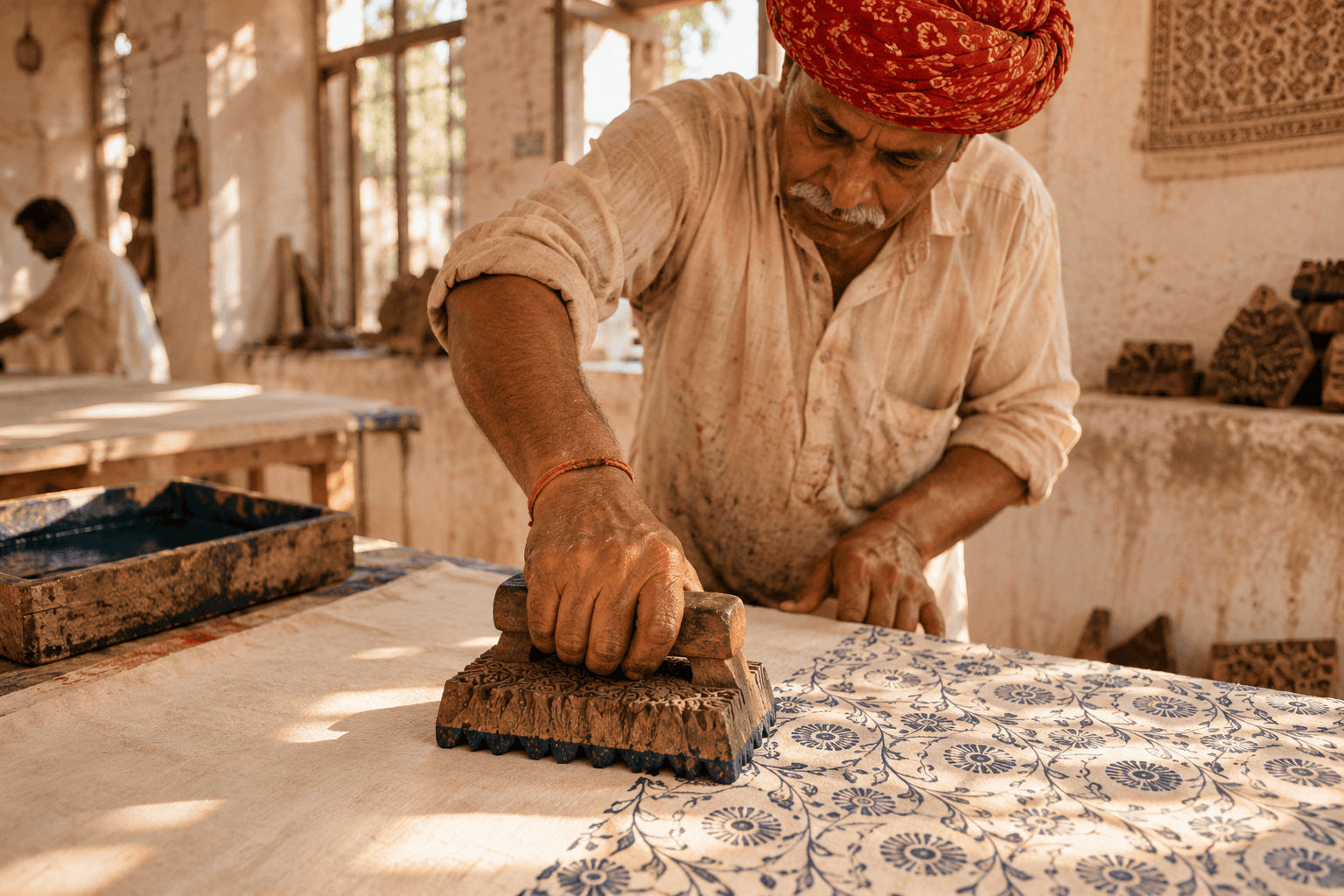
MAKKMAL's hand block-printed bedsheets use traditional Jaipur plant dyes fixed onto the cotton fibre before weaving is complete. Percale's balanced weave accepts dye evenly across the entire surface, resulting in sharp, consistent motif edges. Sateen's floating threads absorb dye unevenly — certain angles catch more pigment, which can cause visible streaking on geometric block print patterns.
For artisanal hand-blocked linens, percale is therefore the technically correct weave — it preserves both the breathability and the visual integrity of the print.
 Handcrafted in Jaipur
Shop Pure Percale Bedsheets
100% single-ply organic Jaipur cotton, woven in breathable 300–400 TC percale. Generous 108 × 108 in master dimensions designed for effortless tuck-in on King and Queen mattresses.
Complimentary 7-Day Returns
Heirloom craft, delivered to your doorstep.
Frequently Asked Questions
Percale is significantly better for Indian summers. Its one-over, one-under weave creates microscopic air gaps that allow constant airflow, dissipating body heat and humidity. Sateen's denser floating-thread structure traps warmth — ideal for cold climates but uncomfortable in Indian heat.
Read Next in The Journal
Expert intelligence on natural fibers, care rituals, and mindful living.
 Care & Craft
How to Care for Jaipur Hand Block-Printed Linens: The Complete Washing & Longevity Guide
Hand block-printed cotton bedsheets are heirlooms, not commodities. One wrong wash cycle can strip years of character. This is the definitive care guide.
 Sizing & Styling
Fitted vs. Flat Sheets: Master Mattress Sizing Guide for Indian Homes
Confused by King vs. Queen sizes, tuck-in depths, or whether a fitted sheet truly works on a 10-inch mattress? This guide resolves every bedsheet sizing question for Indian buyers.
